



















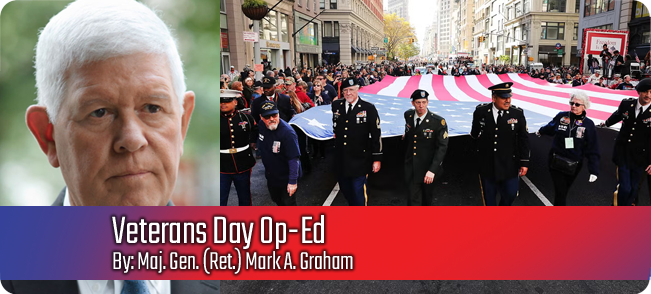
Veterans Day is a federal holiday set aside to honor our military veterans who have served in the United States Armed Forces. It is also a moment to confront a reality that does not fit neatly on a parade banner. On September 30, the Department of Veterans Affairs reported that 6,488 veterans died by suicide in 2024, about 18 a day. Conversations alone about warning signs will not close that gap. What I want to add this year is simpler than a new program or a new slogan: technology can help us reach people, but it cannot replace a human voice.
I want to start with something I said to my wife, Carol, as we drove away from our son Jeffrey’s funeral more than twenty-three years ago: We can either let this be the tragic, horrible book of our lives, or we can make it two tragic chapters.
On June 21, 2003, our son Kevin died by suicide. He was twenty-one, a top ROTC cadet at the University of Kentucky studying to become an Army doctor. He was secretly battling depression and stopped taking his medication out of fear the Army would find out and end his future in the military. Eight months later, our oldest son, Second Lieutenant Jeffrey Graham, was killed by an IED in Khaldiyah, Iraq, while leading his platoon. He saw something out of the ordinary on a bridge, stopped his men while he looked closer, and the IED was remotely detonated by cell phone.
Our sons fought two different battles. Our family was changed forever. What that loss taught us is that the only way forward is to keep showing up for the living.
The numbers still matter, and the newest ones are more specific. Of the veterans who died by suicide in 2024, 62 percent were not receiving VA health care in the year they died or the year before. The rate has moved in the right direction for veterans enrolled in VA care. It has moved the other way for veterans outside it. Transitions, medical discharge, financial fear, loss of identity, and isolation remain high-risk moments. Families often see the change first.
We are also living in an era where people turn to artificial intelligence for answers, companionship, even emotional support. AI is useful. It can organize information, answer questions, and be available at 2 a.m. without judgment. At Vets4Warriors, we use technology every day to reach more people, answer faster, and help our peers stay connected with those who call our 24/7 service. Used well, it is a tool that can support the mission.
But AI did not deploy. AI did not lose friends in combat. AI is not trying to navigate leaving the National Guard or active duty and figure out how to provide for a family. AI cannot pick up the phone and say, with lived authority, “I’ve been there. You’re not alone. Let’s get through this together.”
Peer support is not nostalgia. It is the difference between information and belonging. Isolation magnifies risk, but genuine connection reduces it. A warm handoff after someone leaves the military is not a form to fill out or a checklist. It is a human being staying present with another person until the next connection is secure. A family member who notices the withdrawal, the sleeplessness, or the talk about being a burden needs more than a chatbot. They need language, permission, and a compassionate human being who will stay engaged.
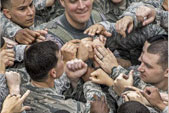
That is the work we have dedicated ourselves to at Vets4Warriors since December 2011: veterans helping veterans, 24 hours a day, confidentially, independent of the VA and the military. We have surpassed one million connections. Each one represents a real voice on the other end of the line who understands transition, loss of purpose, financial pressure, and the heavy weight of carrying things alone. Our peers do not replace clinical care. They reduce the isolation that makes care harder to reach. Fifteen years on, the method has not changed. Someone picks up. Someone stays.
This Veterans Day, and every day after it, I am not asking anyone to reject technology. I am asking us not to outsource the one thing technology can never do. Technology continues to evolve, but the power of human connection is still what saves lives.
If you serve, or served, or love someone who did, check on them. Stay with them. Ask the hard questions. If you are the one struggling, reach out to another human being. Call a peer. Call a friend. Call or text 988 and press 1. Call us at 855-838-8255. We will stay with you. The way forward is to keep showing up for the living.
AI can help us work smarter, but it cannot sit with someone in the hard hours. That part is still on us.
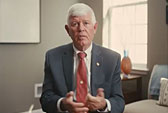
Retired Army Maj. Gen. Mark A. Graham is executive director of Vets4Warriors®, housed at the Rutgers University Behavioral Health Care National Call Center.